
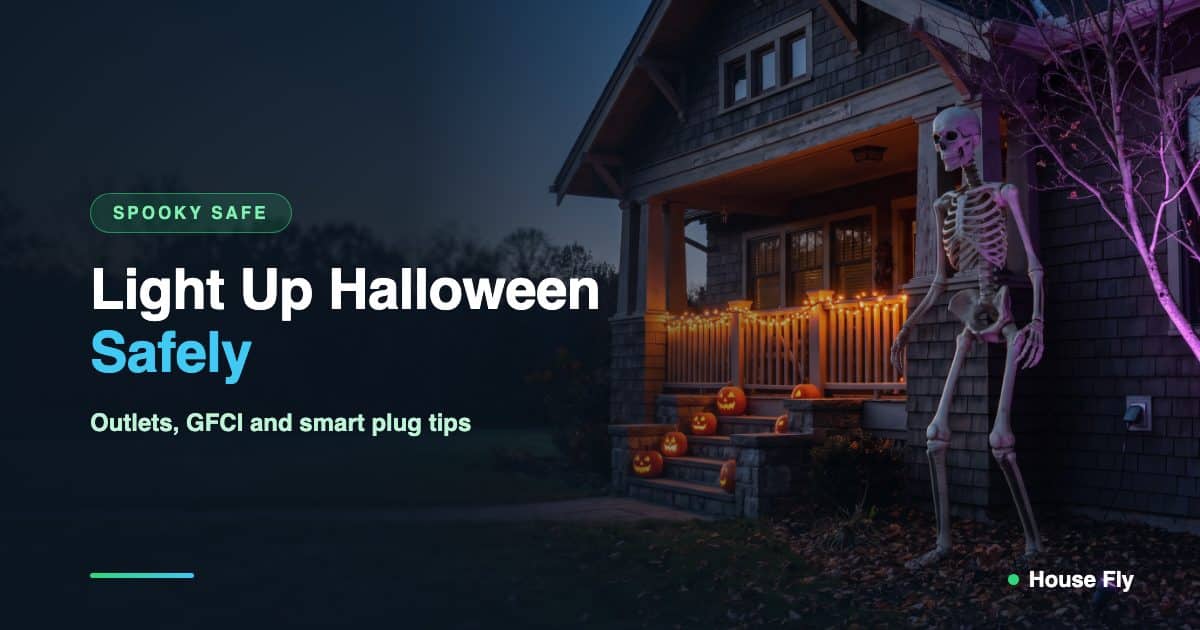
Plug outdoor decorations only into GFCI protected outlets, use outdoor rated cords, and never chain more strands than the box allows.
Halloween decorating has officially gone big. The twelve foot skeleton is now a neighborhood staple, inflatable pumpkins wave from half the lawns on the block, projector lights paint ghosts across garage doors and some homeowners are already running purple and orange through permanent roofline lights they will switch to red and green in five weeks. All of it plugs into something. Most of the time that something is one tired outdoor outlet and a tangle of indoor extension cords snaking under the front door. Here is how to power this season safely, which DIY upgrades make sense, and when it is time for an electrician.
The Big Three Rules for Outdoor Decorations
1. GFCI or nothing
A GFCI outlet, the kind with the little test and reset buttons, cuts power in a fraction of a second if current leaks to ground, like through wet grass or a person. Every outdoor outlet should have one. Press the test button this week; if it does not click off, or if your porch outlet has no buttons at all and no GFCI upstream, that is the first thing to fix.
2. Outdoor rated everything
Check the label on every cord and light strand. Indoor cords have thinner insulation that cracks in cold weather and wet grass. Use outdoor rated extension cords, keep connections off the ground with a stake or a weatherproof cover, and do not run cords through doors or windows where they get pinched.
3. Respect the strand limit
Every box of lights says how many strands can connect end to end. Old incandescent sets often max out at three. Switching to LED strands, which use a fraction of the power, lets you run far more on one circuit and saves money all season. LED strands also run cooler and last years longer, and the U.S. Fire Administration home fire guide is a good reminder of why overloaded cords are never worth the risk.
This Season’s Trends and How to Power Them
- Giant skeletons and animatronics: most draw little power, but they sit out for weeks in rain, so plug them into a GFCI outlet with a covered connection
- Inflatables: blowers run nonstop, so give them their own outlet instead of sharing with heaters or tools
- Projector lights: easy and low power, just keep the plug and transformer off wet ground
- Smart outdoor plugs: a hit for good reason, they put everything on a schedule so nothing runs all night
- Permanent roofline lights: the biggest trend of the year, color changing for every holiday, and best installed on a proper outdoor circuit
Smart plugs are worth a special mention. Setting your display to turn off at 11 at night cuts the power bill, reduces the time cords sit energized in the dew, and keeps the neighbors happy. Just make sure the smart plug itself is outdoor rated.
Warning Signs to Take Seriously
- A GFCI that trips every time it rains, which usually means water is getting into a connection
- Cords or plugs that feel warm to the touch
- A breaker that keeps tripping when the display turns on
- Flickering lights inside the house when the inflatables kick on
- Scorch marks, buzzing or a burning smell at any outlet
Any of these means stop and unplug. The Ready.gov home fire guide is a quick refresher for the whole family, because many decoration fires start with overloaded or damaged cords.
Trick or treaters, kids and pets
Halloween night brings dozens of small feet across your lawn in the dark, many of them in long costumes. Route cords along the edges of walkways instead of across them, tape or pin them flat where they must cross, and keep blowers and transformers out of reach of curious hands and paws. Swap real candles in jack o lanterns for battery tea lights, which are cheap, bright and cannot set a costume on fire. A well lit path is the best decoration of all.
Electrician Costs for Outdoor Power in 2026
| Job | Typical 2026 Cost | Why it helps |
| Replace an outdoor outlet with GFCI | $150 to $350 | Shock protection in wet weather |
| Add a new exterior outlet | $200 to $500 | No more cords under the door |
| Dedicated outdoor circuit | $300 to $800 | Big displays without tripped breakers |
| Weatherproof in use covers | $75 to $200 | Keeps plugs dry while in use |
| Permanent roofline lighting | $1,500 to $4,000 | Every holiday, no ladder again |
An extra outlet near the porch or the front yard is one of the best value upgrades in home electrical work, because you use it every Halloween, every holiday season and every summer for the string lights on the patio. If you already spend a weekend each year wrestling lights onto the gutters, permanent lighting often pays for itself in saved Saturdays and safer ladders.
Book the Outlet Before the Decorations Go Up
The best time to add outdoor power is now, before Halloween and well before the holiday rush. Search electric on housefly.com, see an upfront price and book in a few taps. You pay securely to confirm the booking and follow the job from booked to done without phone tag. House Fly covers 17 home services in 50+ major US cities, so the same app can book a party clean before the guests arrive. In Texas, start with electricians in Dallas. And if a storm knocks the power out mid season, Ready.gov power outage tips keep the family safe until it is back.
Keep the scares in the yard, not in the outlets. See your upfront price for a GFCI upgrade or a new outdoor outlet before the decorations go up. Book it on House Fly and light up the block with total peace of mind.
Frequently Asked Questions
Do outdoor Halloween and Christmas lights need a GFCI outlet?
Yes. Outdoor decorations should always plug into a GFCI protected outlet, which cuts power within a fraction of a second if current leaks through water or a person. Test the outlet with its test button before decorating. If it does not trip, or your outdoor outlet has no GFCI protection, have it replaced before the season.
How many strands of lights can I connect together?
Check the label on the box, because the limit depends on the strand’s wattage. Many older incandescent sets allow only about three connected end to end, while LED strands often allow dozens because they draw far less power. Never exceed the manufacturer’s limit, and spread large displays across more than one outlet or circuit.
How much does it cost to add an outdoor outlet in 2026?
Adding a new exterior outlet typically costs $200 to $500 in 2026, depending on the distance from the panel and wall type. Replacing an existing outdoor outlet with a GFCI model runs about $150 to $350, and a dedicated outdoor circuit for big displays costs roughly $300 to $800, including a weatherproof cover.
Are smart plugs safe for outdoor decorations?
Smart plugs are safe outdoors as long as the plug itself is rated for outdoor use and plugged into a GFCI protected outlet. They are popular because they put lights, inflatables and projectors on a schedule, which lowers power bills, limits how long cords stay energized overnight and keeps the display running without daily attention.
