
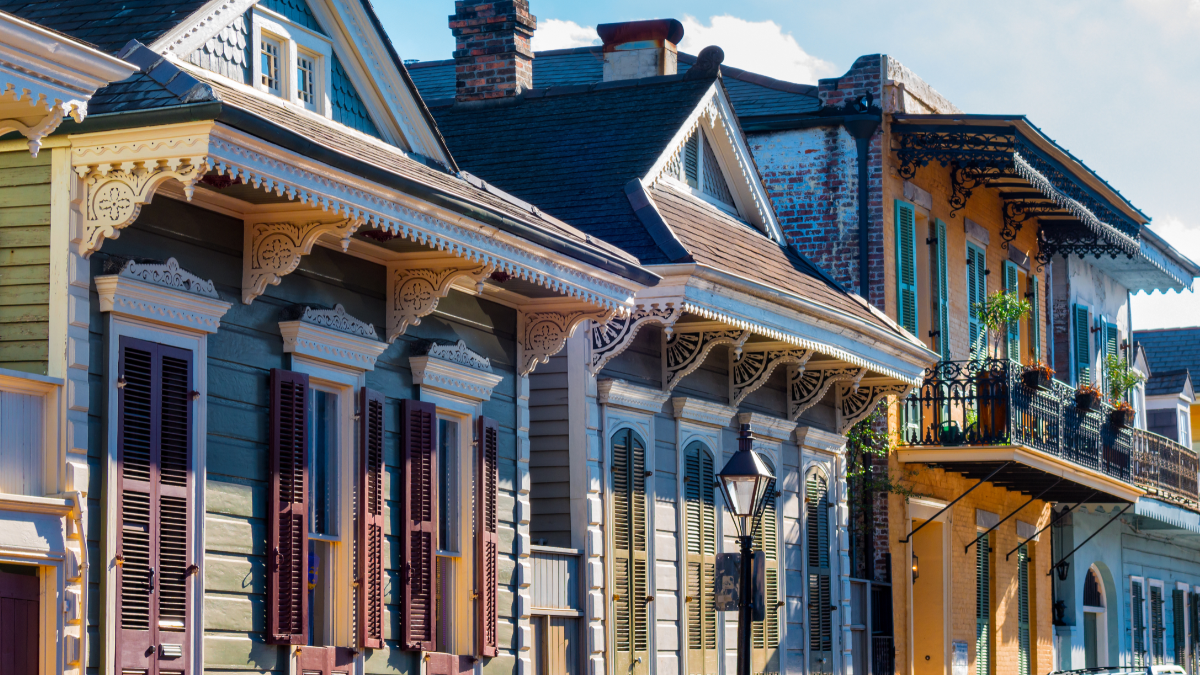
Most New Orleans house exteriors need repainting every 5 to 8 years, and sun facing trim often needs it sooner. The five clearest signs it is time are peeling or blistering paint, chalky residue, mildew that comes back after washing, soft or cracked wood, and heavy fading. Catching them early keeps a repaint from turning into a wood repair job.
How often should you repaint a house in New Orleans?
Gulf sun, months of heavy humidity, frequent rain and the occasional tropical storm wear paint down faster here than in drier parts of the country. How long a paint job lasts depends on the surface, the paint and how well it was prepped. Use these typical intervals as a starting point:
| Surface | Typical repaint interval in New Orleans | Notes |
|---|---|---|
| Wood siding (cypress, pine) | 5 to 8 years | South and west walls often fail first |
| Trim, shutters, porch rails | 3 to 5 years | Most exposed to sun and rain |
| Stucco | 7 to 10 years | Watch for hairline cracks |
| Fiber cement siding | 8 to 12 years | Holds paint better than wood |
| Porch floors | 2 to 4 years | Foot traffic and standing water |
| Interior walls | 5 to 10 years | Kitchens, baths and kids rooms sooner |
If your last paint job was rushed or skipped primer, expect the low end of those ranges. A careful job with premium acrylic on dry, primed wood often reaches the high end.
What are the 5 signs your house needs paint?
1. Peeling, cracking or blistering paint
Peeling is the most obvious sign. When paint lifts, water gets behind it and soaks into the wood. In New Orleans that usually starts on window sills, the bottom edges of siding boards, porch columns and anywhere a gutter overflows. Blisters, small bubbles in the paint film, often mean moisture is trying to escape from the wood or the paint was applied in direct sun. Press a blister: if water comes out, there is a moisture problem to fix before painting.
2. Chalky residue when you touch the wall
Rub your hand across a sunny wall. If it comes away with white or colored powder, the paint is chalking, which means the binder has broken down from UV exposure. Chalking paint no longer protects the surface well, and it has to be washed off before new paint will stick.
3. Mildew that keeps coming back
Black or green streaks on shaded walls, under eaves and on porch ceilings are common in this climate. If a good wash removes them and they stay away for a year or more, you may not need paint yet. If they return within weeks, the paint film is likely worn and porous. A mildew wash followed by primer and paint with mildew resistant additives is the usual fix.
4. Soft, cracked or rotting wood
Push a screwdriver gently into window sills, the bottoms of door frames, porch steps and corner boards. If it sinks in easily, the wood is rotting. Rot spreads when paint fails, so small soft spots are a strong signal to repaint soon, after the bad wood is cut out and replaced. Soft wood can also attract termites, which are a serious issue in the area. Our New Orleans termite prevention guide explains what to watch for.
5. Faded or uneven color
Bright Bywater and Marigny colors fade quickly in full sun. If the street side of your house looks noticeably lighter than the side in shade, or touch ups stand out as patches, the finish has aged past the point where spot painting blends in. Fading on its own is cosmetic, but it often shows up alongside chalking.
What are the signs inside the house?
Interior paint does not face sun and rain, but New Orleans humidity still takes a toll. Watch for these signs that a room is ready for fresh paint:
- Scuffs and marks that no longer wash off without taking paint with them
- Peeling or bubbling paint in bathrooms and above showers, often from poor ventilation
- Hairline cracks in old plaster walls and ceilings that have spread over time
- Yellowed ceilings or trim, common in older homes with oil based paint
- Water stains from past roof or AC leaks, which need a stain blocking primer once the leak is fixed
Can you just touch up instead of repainting?
Touch ups work when the problem is limited, for example one peeling sill or a single weathered shutter, and the rest of the paint is sound. Once more than about 20 to 30 percent of a wall shows failure, or the paint is chalking across the whole surface, a full repaint of that side is usually the better value. New paint on one area next to old faded paint rarely matches.
- Touch up: small isolated peeling, a few nail holes, one damaged board after repair.
- Repaint one side: the sunny side is chalking or fading but the others are fine.
- Full repaint: widespread peeling, chalking on every side, or more than one sign above.
What happens if you wait too long to paint?
Paint is the main thing standing between New Orleans humidity and your wood. Once it fails, water soaks into siding and trim, rot starts, and the job grows from painting to carpentry. Replacing rotted clapboards, sills and porch columns can add hundreds or thousands of dollars before a painter even opens a can. Waiting also means more scraping and priming, which raises the labor cost of the eventual paint job.
Before hurricane season is a smart time to check. A sound paint film helps shed wind driven rain, and our New Orleans hurricane season home maintenance guide lists other things to inspect at the same time.
How do you plan a repaint in New Orleans?
- Walk the house and note which of the five signs you see and where.
- Fix leaks, gutters and rotted wood first so new paint goes on a sound surface.
- Aim for fall or spring, when humidity and rain are lower.
- Choose a quality exterior acrylic made for humid climates. Our guide to the best exterior house paint can help.
- If you live in a historic district, check whether color or material changes need approval.
For color ideas and a deeper look at prep, read the ultimate guide to painting your home in New Orleans. When you are ready, House Fly shows an upfront price for the painting service, you book at that price, and House Fly handles the rest, with payment held until the job is done.
See your upfront price and book your house painting on House Fly.
Frequently asked questions
How do I know if my house needs to be painted?
Look for peeling or blistering paint, chalky powder on your hand when you rub a wall, mildew that returns soon after washing, soft or cracked wood on sills and trim, and colors that look washed out. If you see two or more of these signs, a repaint is usually due.
How long does exterior paint last in New Orleans humidity?
Most well prepped wood exteriors last about 5 to 8 years in New Orleans. Trim, shutters and porch floors often need attention every 2 to 5 years because they take the most sun, rain and foot traffic. Quality acrylic paint over dry, primed wood lasts noticeably longer than a rushed job.
Can I paint over mildew?
No. Paint applied over mildew will not bond well, and the mildew can grow back through the new coat. The surface should be washed with a mildew cleaner, rinsed, allowed to dry fully, and then primed. Using paint with mildew resistant additives helps it stay clean longer in humid weather.
Is it worth repainting before selling a New Orleans home?
Often, yes. Fresh exterior paint makes a strong first impression in listing photos and showings, and it signals that the wood underneath has been cared for. Buyers and inspectors pay close attention to peeling paint and rot on older homes, so fixing those issues first can help avoid repair requests later.
