
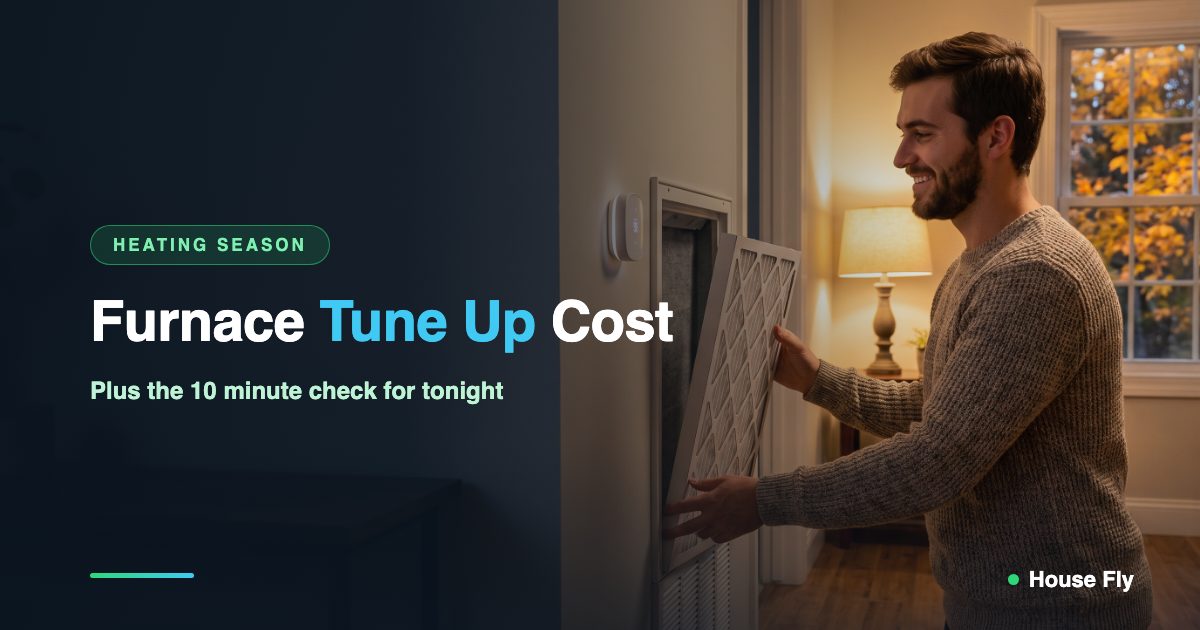
A furnace tune up costs $90 to $200 in 2026. Before you book one, a 10 minute filter and thermostat check can catch the most common no heat problems yourself.
There is a specific kind of October night that every homeowner knows. The forecast says 41 degrees, you nudge the thermostat up for the first time in six months, and then you wait. Maybe you smell that burnt dust smell that means the furnace is working. Maybe you hear a click, a pause, and nothing. Either way, mid October is the moment to find out, not the first freezing night in December when every heating company in town is booked solid. This guide covers what a furnace tune up costs this year, what it should include, and the quick DIY checks you can do tonight with a flashlight and a new filter.
Furnace Tune Up Cost in 2026
Most tune ups land between $90 and $200. Here is what you can expect to pay for the tune up itself and for the repairs a technician most often finds this time of year.
| Service | Typical 2026 cost | Notes |
| Basic safety check | $90 to $120 | Filter, thermostat, visual check |
| Full furnace tune up | $120 to $200 | Burners, flame sensor, blower, CO test |
| Flame sensor cleaning | $80 to $150 | Common cause of short cycling |
| Hot surface igniter replacement | $150 to $350 | Clicks but never lights |
| Thermostat replacement | $150 to $400 | Smart models at the high end |
| Blower motor replacement | $400 to $900 | Squealing or no airflow |
On House Fly you see the price for an HVAC visit before you book, so there is no surprise number at the door. In Louisiana, see HVAC service in New Orleans.
Timing changes the price more than most people expect. In early and mid October, technicians have open schedules, visits are relaxed, and there is time to clean everything properly. After the first hard freeze, the same companies are running back to back emergency calls, tune ups get pushed out two or three weeks, and after hours visits can cost double. Booking now is the cheapest way to buy a warm winter, and it means any repair the technician finds can be scheduled calmly instead of on the coldest night of the year.
What a Real Tune Up Should Include
A tune up is not just someone looking at the furnace and changing the filter. A thorough visit should cover these points, and it is fair to ask for them in writing.
Safety first
- Carbon monoxide test at the furnace and in the living space
- Heat exchanger inspection for cracks
- Gas connections checked for leaks
- Safety switches and limit controls tested
Performance
- Burners cleaned and flame pattern checked
- Flame sensor cleaned, the single most common fix in fall
- Blower wheel and motor inspected, belts adjusted if present
- Thermostat calibration and a full heating cycle observed
The Consumer Product Safety Commission recommends yearly professional inspection of heating systems plus working carbon monoxide alarms, which is exactly why the CO test belongs in every tune up.
The 10 Minute DIY Furnace Check
Do this tonight. It costs the price of a filter and solves a surprising number of fall heating calls.
Minute 1 to 3: the filter
Turn the system off, slide out the filter, and hold it up to a light. If you cannot see light through it, replace it. Match the size printed on the frame and point the airflow arrow toward the furnace. A clogged filter is the number one reason a furnace overheats and shuts itself off.
Minute 4 to 5: the thermostat
Swap the batteries if your thermostat uses them, confirm it is set to heat, and set it five degrees above room temperature. If the screen is blank or the schedule is from last winter, fix it now. The ENERGY STAR thermostat guide explains the setback schedule that can trim up to 10 percent off heating costs.
Minute 6 to 7: the vents
Walk the house and open every supply vent and return. Move couches, rugs, and holiday storage bins that summer pushed on top of them. Blocked returns starve the furnace of air.
Minute 8 to 10: listen and smell
Stand near the furnace as it starts. A faint burnt dust smell for the first run is normal. A boom, a loud squeal, a rotten egg smell, or a burner that lights and goes out over and over is not. If you hear any of those, shut it off and book a tune up. Our guide to spooky house sounds explains what each furnace noise usually means.
Fun Fall Upgrades While You Are at It
Heating season is also when a few small upgrades make the whole house feel cozier for not much money.
- A smart thermostat with a schedule and room sensors, one of the most popular DIY swaps this year
- Door draft stoppers and new weatherstripping on the front and back doors
- A ceiling fan switched to clockwise on low, which pushes warm air back down
- A humidifier for dry winter air, which also makes 68 degrees feel warmer
When to Skip DIY and Book It
Anything involving gas valves, the heat exchanger, electrical controls, or a repeated burner failure belongs to a technician. Book early, because once the first hard freeze arrives, calls about no heat crowd out tune ups for weeks. With House Fly you search for the service, see an upfront price, and book in a few taps, with payment confirming the booking so it is locked in. House Fly covers 17 home services in 50+ major US cities, from HVAC to plumbing to cleaning, all booked the same simple way.
Beat the first freeze. Book your furnace tune up now with the price shown upfront, no phone tag. Book it on House Fly and stay warm all winter.
Frequently Asked Questions
How much does a furnace tune up cost in 2026?
A furnace tune up typically costs $90 to $200 in 2026. Basic safety checks sit at the low end, while a full tune up with burner cleaning, flame sensor service, blower inspection, and a carbon monoxide test lands at $120 to $200. Prices run a little higher in large cities and during the first cold weeks of the season.
How often should I change my furnace filter?
Check the filter every month during heating season and replace standard one inch filters every one to three months. Homes with pets, allergies, or recent remodeling dust need changes closer to monthly. Thicker four or five inch media filters can last six months or more. A clogged filter makes the furnace work harder and can trip safety limits.
Is a yearly furnace tune up really necessary?
For most homes, yes. A yearly tune up catches cracked heat exchangers, dirty flame sensors, and failing igniters before they cause a no heat night or a safety problem. It also keeps the system running efficiently, which lowers gas bills. Many manufacturer warranties also expect documented annual maintenance, so keep your service receipts.
What temperature should I set my thermostat to in winter?
The Department of Energy suggests about 68 degrees while you are awake and home, and setting it back 7 to 10 degrees for eight hours a day while asleep or away. That simple schedule can trim heating costs by up to 10 percent a year. A programmable or smart thermostat makes the schedule automatic.
